TownStack: Running Many Town Websites From One Place, Without Typing Anything Twice
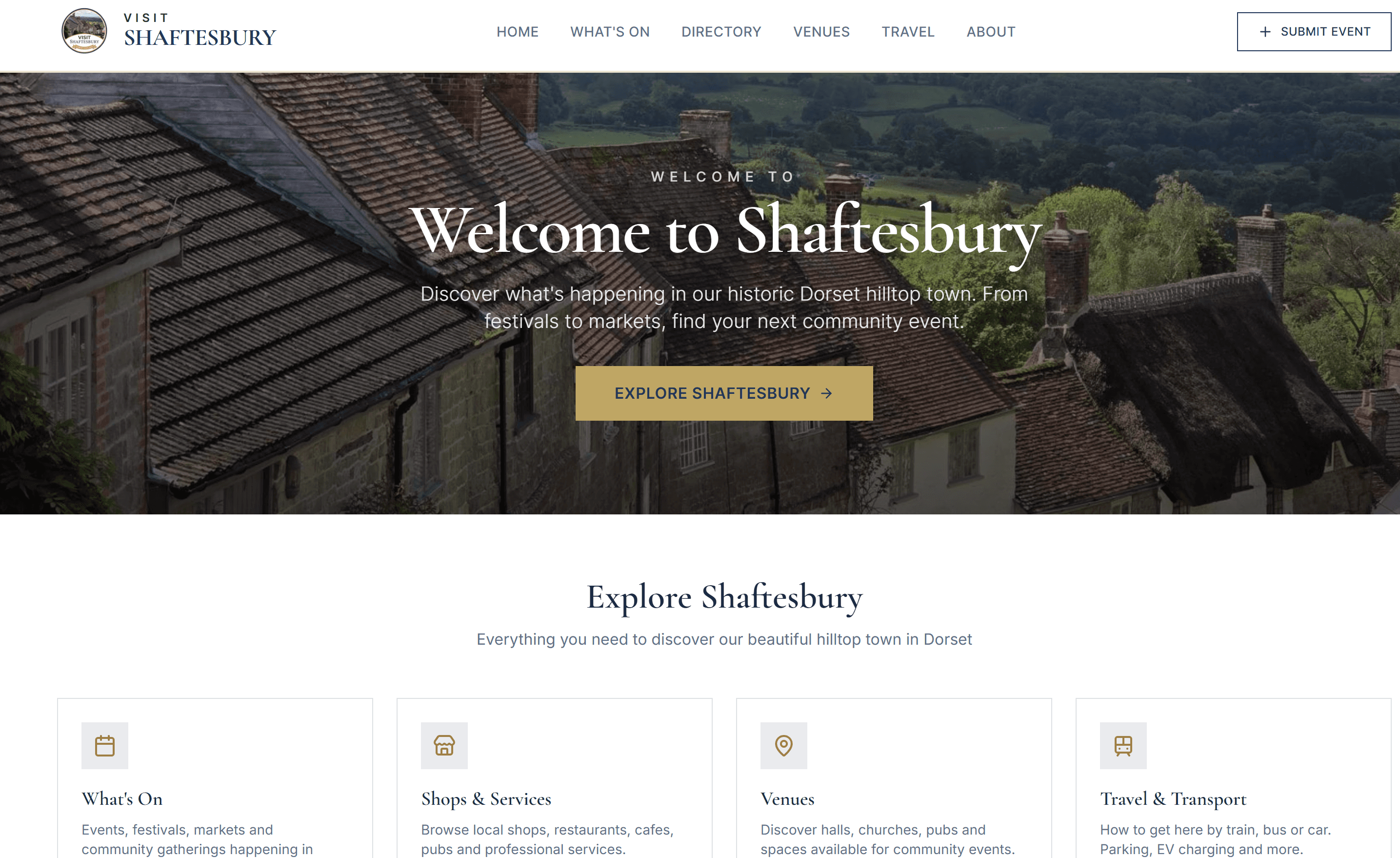
TownStack is the system behind a growing network of South West town websites, including The West List, our regional what's on guide, and Visit Shaftesbury, a town's own site. We built it, and this piece explains how, and why the same idea works for anyone running one or several local websites.
If The West List answered the question "how do you fill a regional guide without a newsroom", TownStack answers the next one: "how do you run several town websites at once, and keep them in step, without typing anything twice."
The problem
Local websites multiply. A region has a guide, a town has its own site, a festival has a page, and each one is built differently by whoever built it. The same event often belongs in more than one place. A Shaftesbury market belongs on the town's own site and on the regional guide. Entered by hand, that is the same job done twice, and it quietly stops happening.
There is a second trap. Copy the same listing onto two sites naively and Google sees duplicate content and has to guess which one matters. Do that at scale and you can harm the very sites you are trying to promote.
We wanted one place to run all of it, where a listing is entered once, appears wherever it belongs, and every site stays fast, distinct and on the right side of Google.
What we built
TownStack is a single admin console that sits across all the sites. One secure, invite-only login, and from one screen you can edit any site's events and business listings and move content between sites. It currently drives The West List and Visit Shaftesbury, with more towns to follow.
Each town keeps its own website, its own brand and its own audience. TownStack is the shared plumbing behind them, not a template that makes them all look the same.
One event, two sites, no duplicate typing
The feature that started it all is syndication. When a Shaftesbury event should also appear on the regional guide, one click copies it across.
The important part is what happens underneath. The copy carries a canonical tag pointing back to the original, so both sites keep a real, visitable page and their own local audience, while Google is told plainly which one is the source. You get the reach of appearing on two sites with none of the duplicate-content risk, and the town that created the listing keeps the credit.
The clever part: every site is different, and that is fine
The sites were each built on their own terms, and their content is structured differently under the bonnet. One stores an event's date as two separate fields, another as a single timestamp. One writes descriptions as plain text, another as rich text. One points at a separate venue record, another just holds a name. Even the list of categories differs from site to site.
The lazy answer would be to force every site onto one identical structure. That means a risky migration on sites that are already live and serving the public, which is a poor way to begin. So instead we built a translator for each site, an adapter that speaks that site's own language, converting dates, descriptions, venues and categories as content moves. If a site genuinely cannot hold something, the form greys it out and says why, rather than accepting an edit and quietly dropping it. The console bends to each site, not the other way around.
Editing that respects the people doing it
One form serves both sites, and an edit saves live with no approval step, because the people using the console own these sites and a typo fix should not need signing off. Public submissions are a different job and still go through a proper moderation queue before anything is published.
We were careful about one unglamorous detail: spotting when the same event already exists on both sites. TownStack matches on the title and the date together, never the title alone. The local football club plays the same opponents home and away, so two genuinely different fixtures can carry identical titles and only the date tells them apart. Getting that wrong would either hide real events or create duplicates, so it is tested rather than trusted.
Fast by default
A town site is full of pictures, and a heavy photo is a slow page for every visitor from then on. So every image is shrunk in the browser, before it is ever saved, aiming at a size budget rather than a fixed quality. A 4 MB phone photo becomes a sharp 180 KB hero image on its way in, and the person uploading it sees exactly what happened. Speed is designed in at the point content is created, not bolted on later.
Getting it back out
The regional guide assembles its own weekly email, county by county, and the console previews and queues it. In keeping with how we build everything here, nothing posts itself: the console prepares the newsletter and the social cards, and a human presses send. Free listings for everyone, with any paid placement always labelled. Trust is the product.
Why it matters
TownStack is the working version of an idea we think is the future of local information online: one database, many town fronts. Each place keeps its own site and its own voice, the regional guide brings them together, and the admin that used to make this impossible on a small budget, the retyping, the duplication, the drift between sites, is mostly gone. What is left is judgement, which stays with the people who know the place.
Want something like this for your town, region or organisation?
Whether you run a single town or tourism site or a whole network of them, this is the kind of thing we build. Let's talk, twenty minutes, no pitch.
Book a free consultation and we'll show you the console and the sites it runs.
Ready to put your town on the map?
Book a free consultation and we'll show you what's possible.
More from the blog
Why Your Town Needs a Modern Digital Presence in 2025
10 February 2025
Managing a Town Website: Why Ongoing Support Matters More Than the Build
17 February 2025
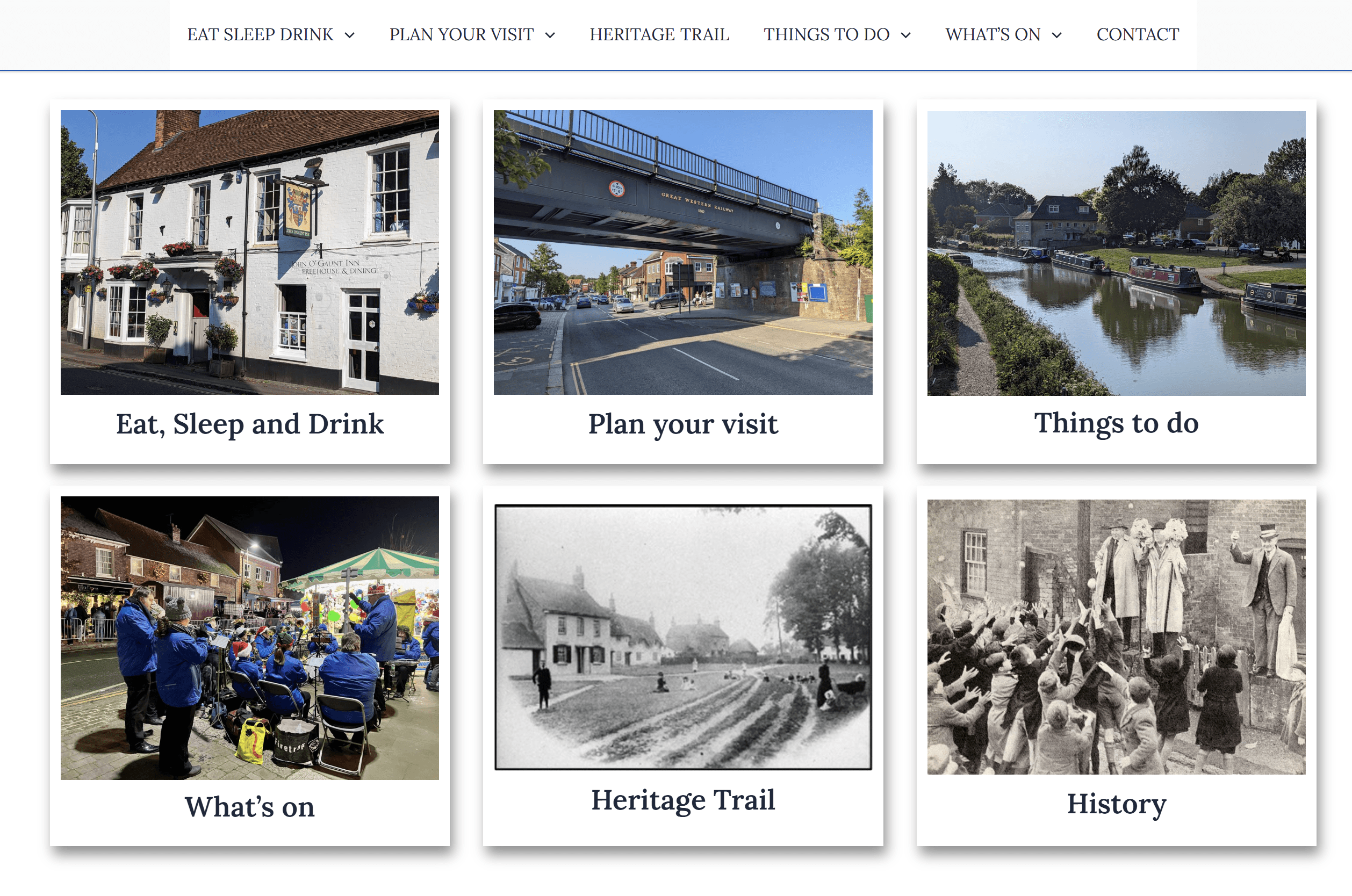
How a Great Town Website Boosts Local Shops, Events, and Services
24 February 2025
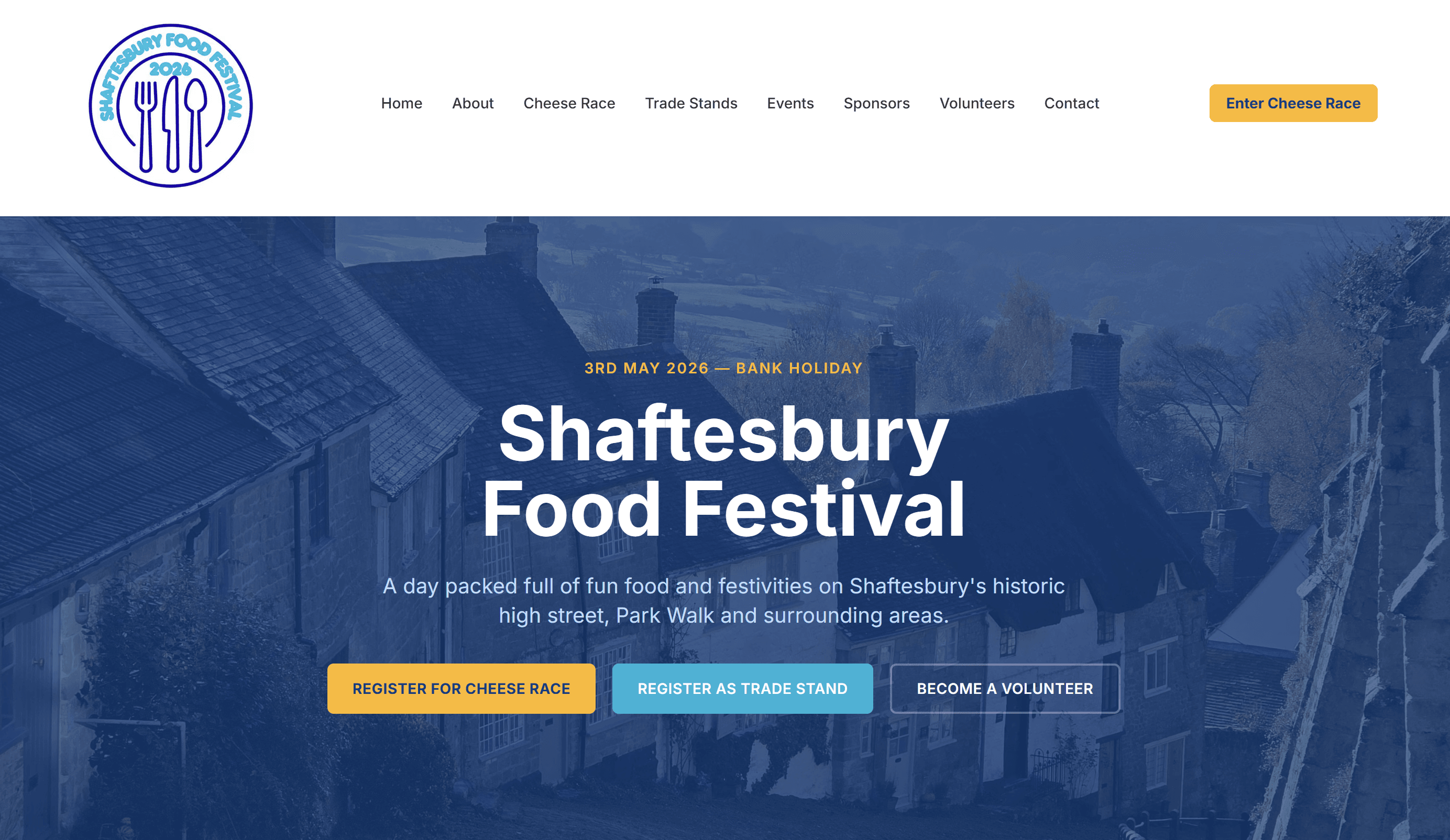
What Shaftesbury Food Fest Taught Us About Building Community Engagement Tools
23 March 2026
Why a Great Events Calendar Is the Best Investment Your Town Can Make
23 March 2026
Case Study: The West List
21 August 2026
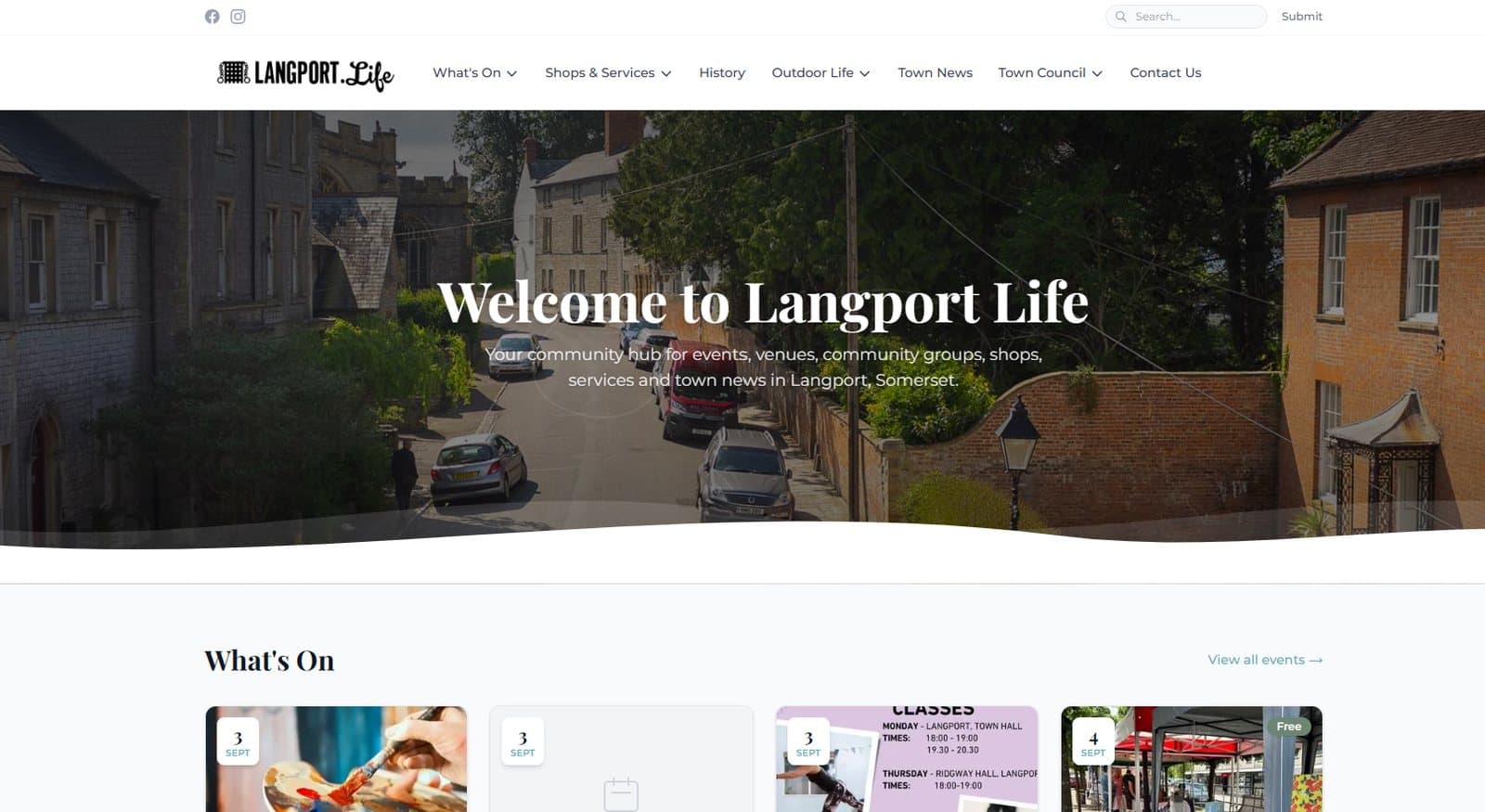
Case Study: Langport Life. A Bespoke Town Website and Council CMS, Built for Speed
27 August 2026